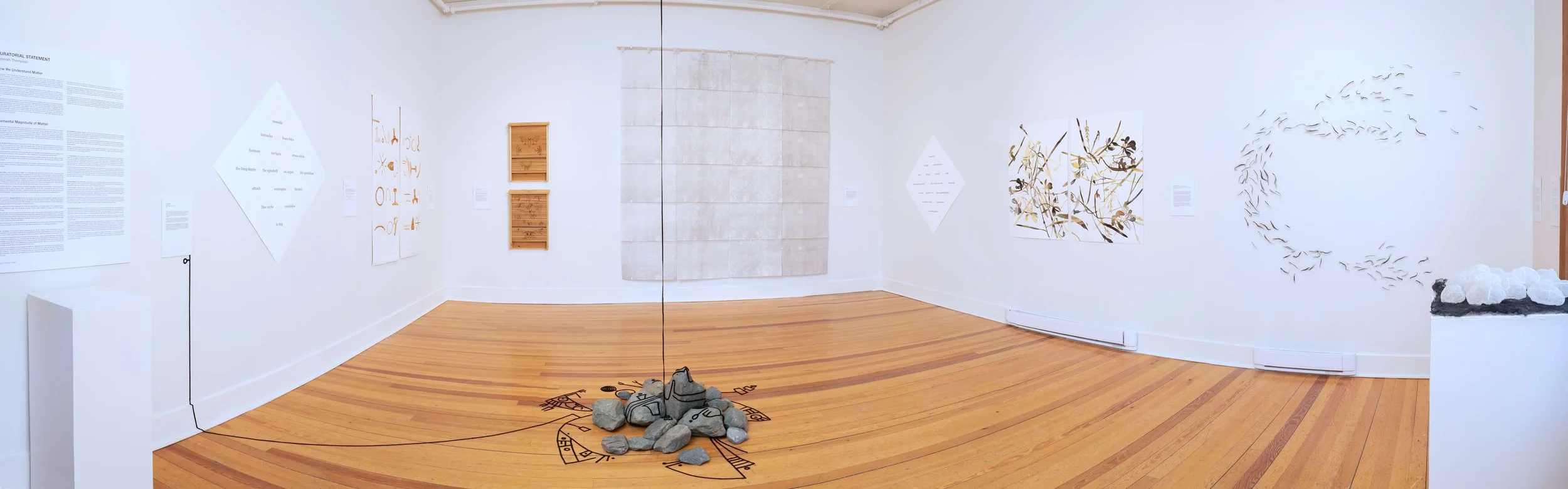
LOOT: Orienting to Matter
Ten Thieves ARTIST CollectiveJim Holyoak, Hildur Jónasson, Eimear Laffan, Genevieve Robertson, Maggie Shirley, Marnie Temple, Carol Wallace, Deborah Thompson.
“The glyphs, by-products of metal’s entanglement with oxygen, capture metal’s return to minerals. The artist asks us to reflect on a broader material perspective: matter as shared matrix for life and its enduring capacity for renewal.”
Deborah Thompson, Curator
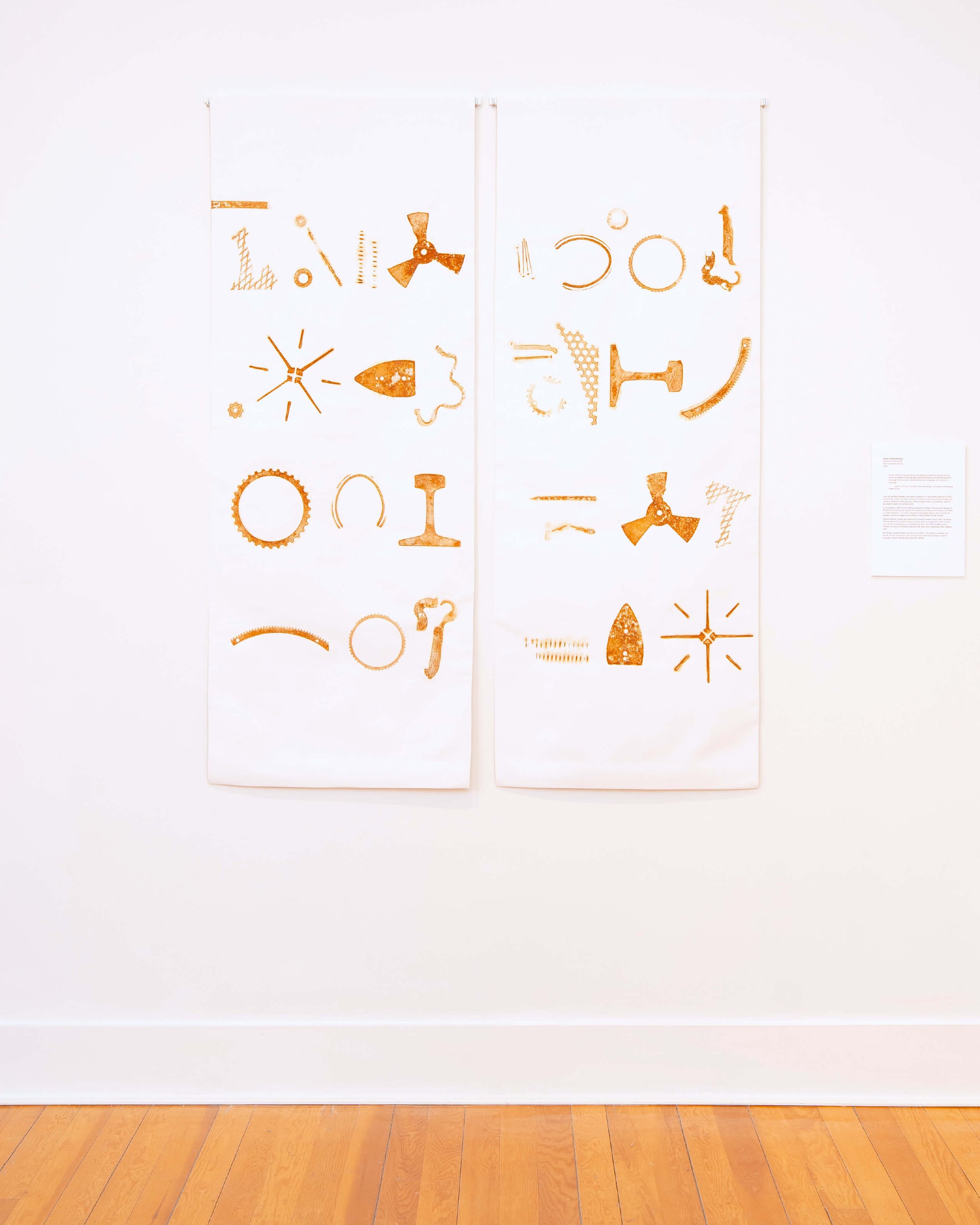
GLYPHS AND GRAMMAR Rust on primed canvas, 2026 Diptych 23” x 60” each
![[Detail] GLYPHS AND GRAMMAR
Rust on primed canvas, 2026
Diptych 23” x 60” each](https://images.squarespace-cdn.com/content/v1/5255ad64e4b0989fbaee8f1f/5c43cbcf-6514-4365-bc1a-5d30f6a9d9b4/Detail_G%2BG_37.jpeg)
[Detail] GLYPHS AND GRAMMAR Rust on primed canvas, 2026 Diptych 23” x 60” each
![[Detail] GLYPHS AND GRAMMAR
Rust on primed canvas, 2026
Diptych 23” x 60” each](https://images.squarespace-cdn.com/content/v1/5255ad64e4b0989fbaee8f1f/766f78bc-5f26-4871-99b8-0a79f681927a/Detail_G%2BG_38+%281%29.jpg)
[Detail] GLYPHS AND GRAMMAR Rust on primed canvas, 2026 Diptych 23” x 60” each
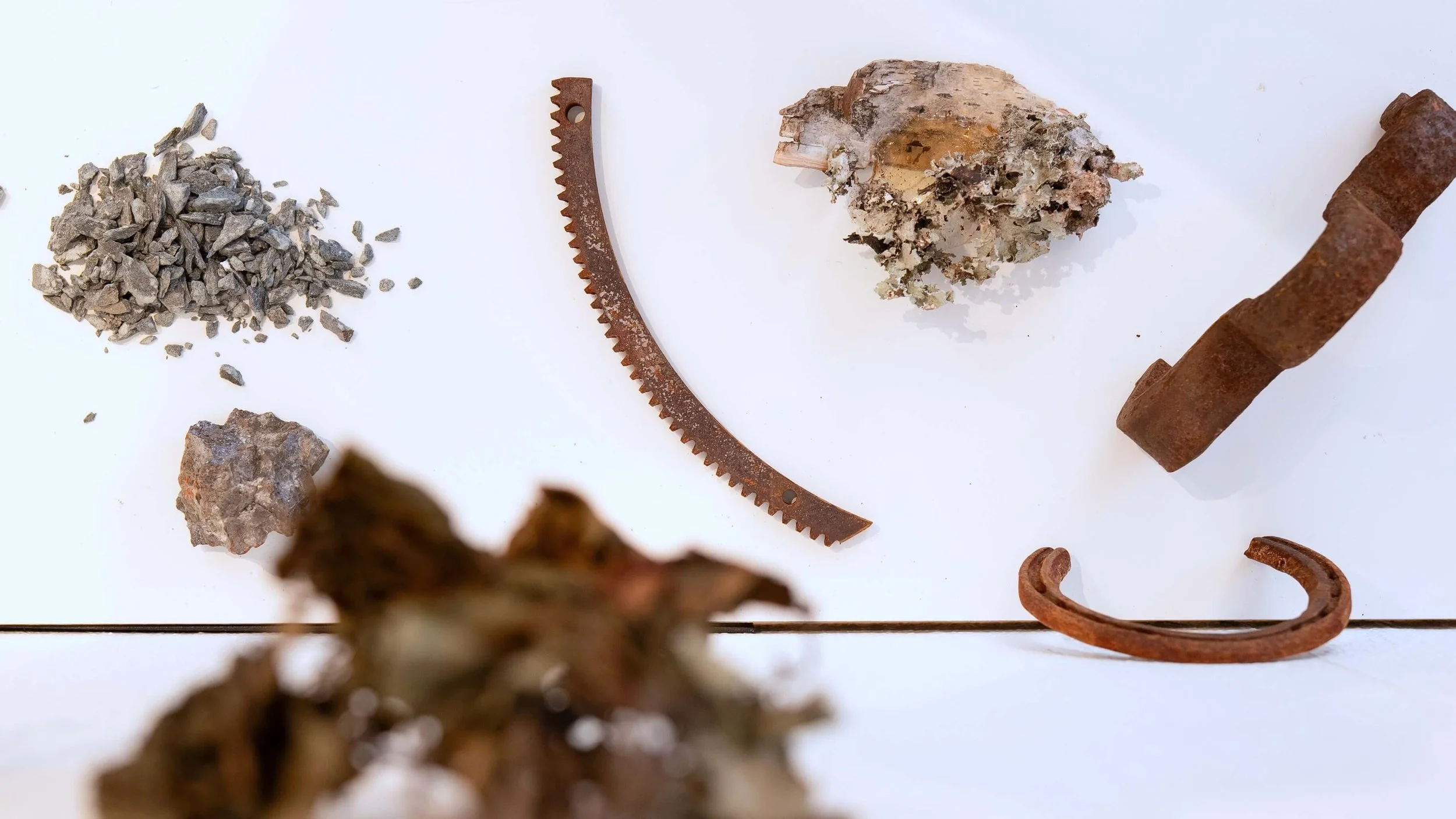
Process
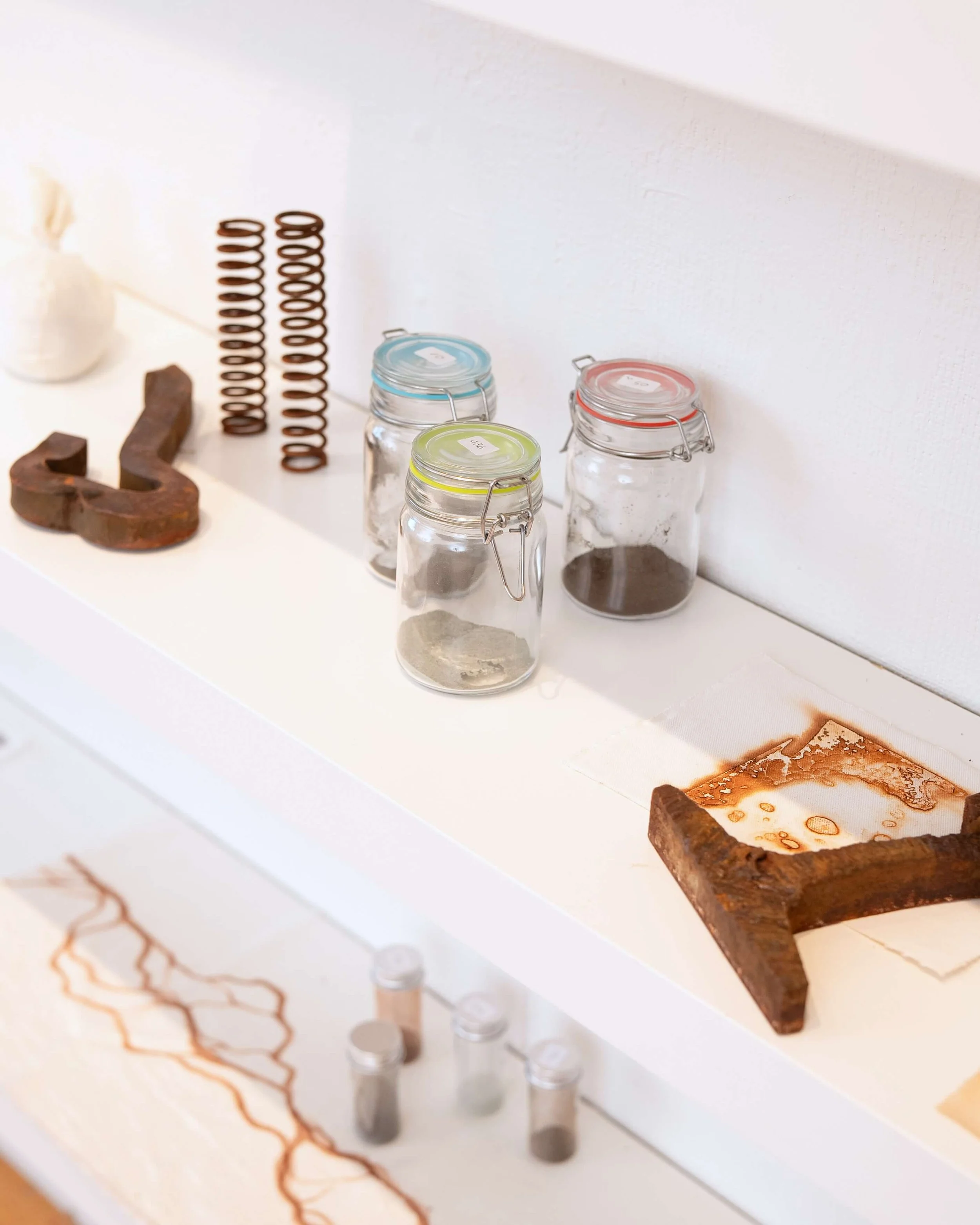
Process
Wide Installation
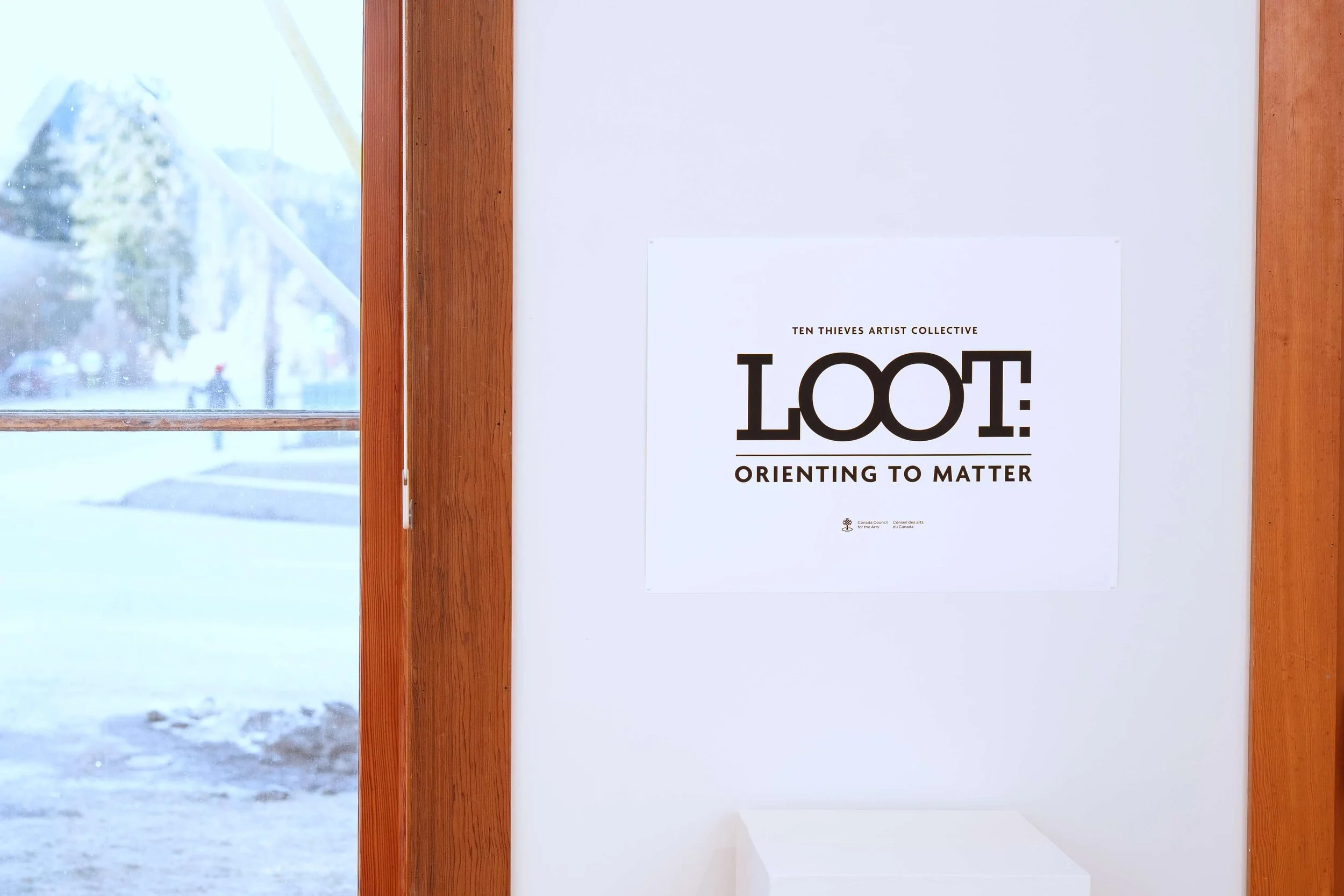
Title Wall
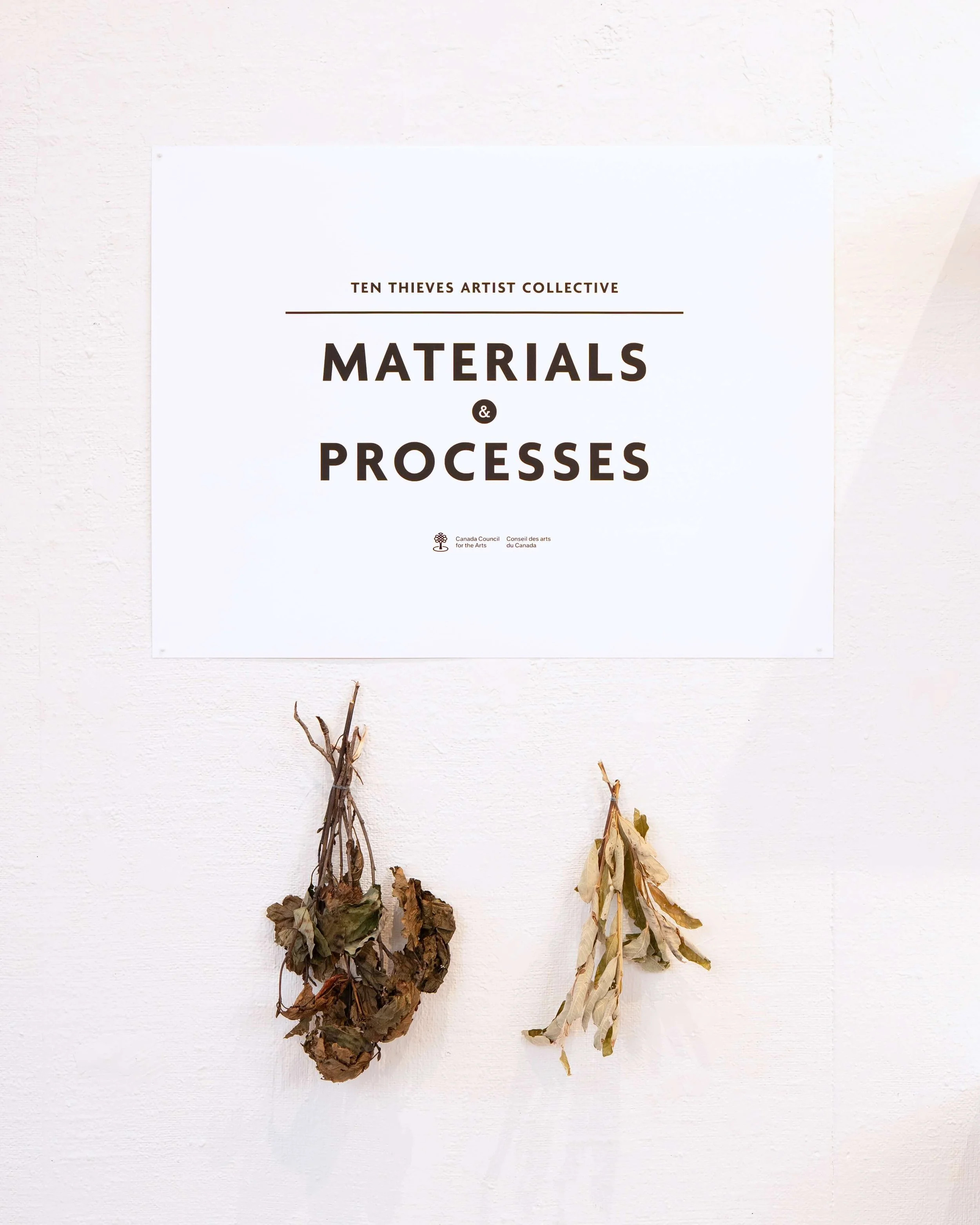
Materials & Processes
* All artwork images are by Jeremy Addington except LOOT which was by Kenton Doupe.ARTIST STATEMENT
Glyphs and Grammar
If conventional writing demands that objects translate themselves into our terms, eco-asemics reverses that, demanding that we come to terms with a language that is to some degree familiar as a language—but it is not our language.
Asemic: The Art of Writing, Peter Schwenger. (University of Minnesota Press, 2019)
Over the last few decades, I’ve made a collection of rusty objects because I love to look at them. Lately I’ve been making rust stains on cloth using these domestic and industrial objects to make glyphs or marks in a grammar of my invention, a sort of eco-asemic poetry on canvas scrolls.
In my practice, I often think of cloth as a stand in for flesh. They are both tissues. In English the word tissue is used for the molecular construction of muscle or soft flesh in a slide dissection. In French the word for biological tissue is tissu. Our animal tissues must have oxygen to live: without it we are dead in three minutes.
We combine the oxygen we breathe into our body’s waters, blood, flesh, and bone. The corrosion of iron, and iron alloys such as steel by oxygen and water to make rust mimics what happens in our bodies over time. Our blood is reliant on iron mineral giving it a metallic smell and that rusty colour, especially when it stains cloth.
As we age, oxygen furthers corruption of our flesh. The longer we breathe the sooner we die. In this work I am coming to terms with life and death in Earth’s language made by familiar and unfamiliar objects.